Relationship Counseling for Diverse Relationships & Identities
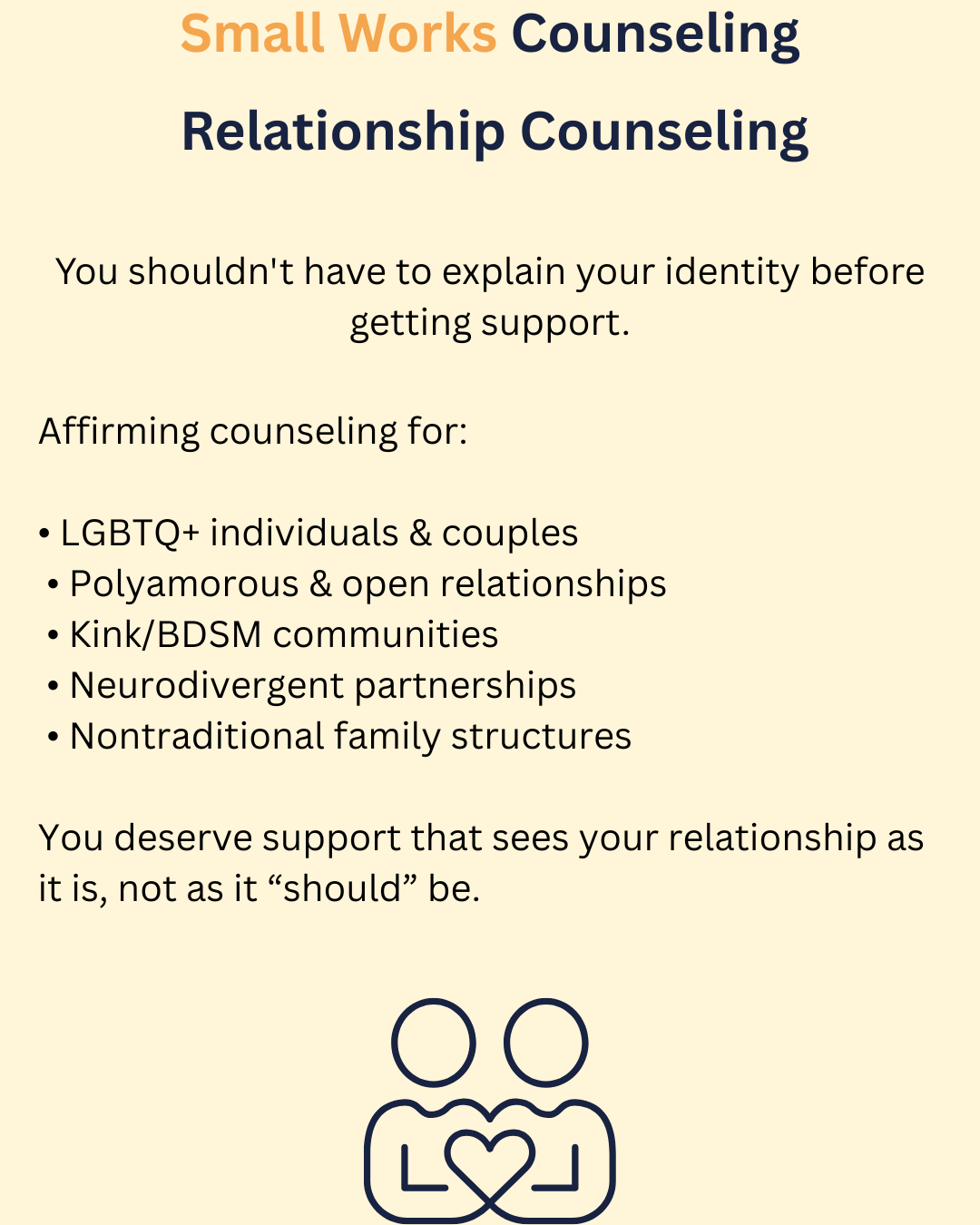
Affirming couples counseling for LGBTQ+ relationships, polyamorous relationships, open relationships, kink communities, and nontraditional partnerships.
Relationships do not all follow the same script — and therapy shouldn’t assume they do.
Whether you are navigating communication challenges, trust concerns, neurodivergence, life transitions, intimacy changes, parenting, identity exploration, or simply wanting a stronger connection, counseling can offer a space to slow down, reflect, and build new patterns together.
At Small Works Counseling, I strive to provide relationship counseling that is affirming, trauma-informed, and curious rather than judgmental. You should not have to spend sessions educating your therapist about your identity, relationship structure, or community before beginning the work that matters.
You deserve support that meets you where you are.
-
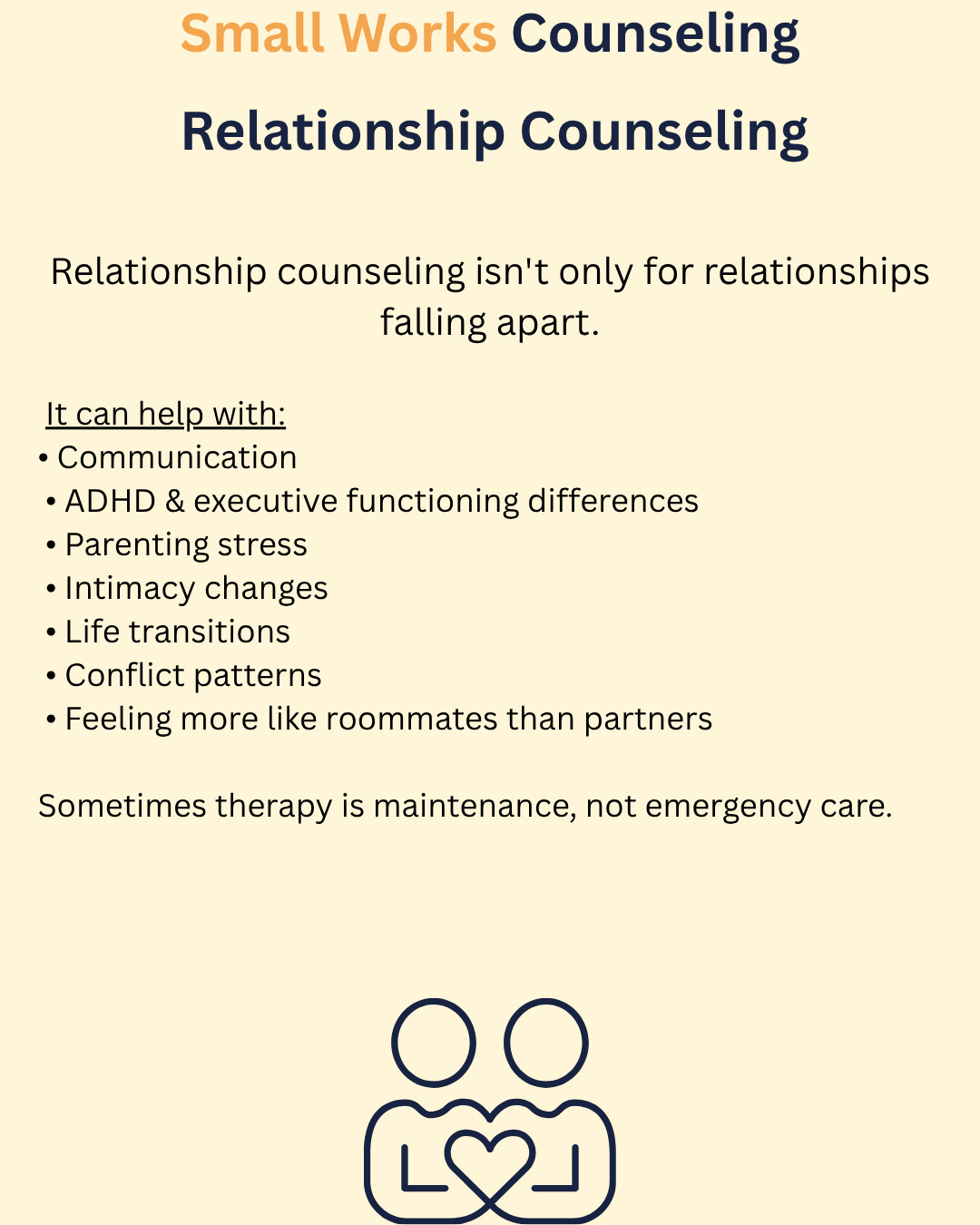
Description tMany couples or partners come to therapy because of:
Communication difficulties
Repeated arguments or conflict cycles
Trust concerns or rebuilding after hurt
Life transitions and stress
Parenting differences
ADHD or neurodivergence affecting relationships
Intimacy and sexuality concerns
Navigating poly/open relationship agreements
Jealousy and insecurity
Boundary setting
Identity exploration
Feeling disconnected or “more like roommates”
Wanting preventative support before problems grow
You do not need to be in crisis for counseling to help.
-
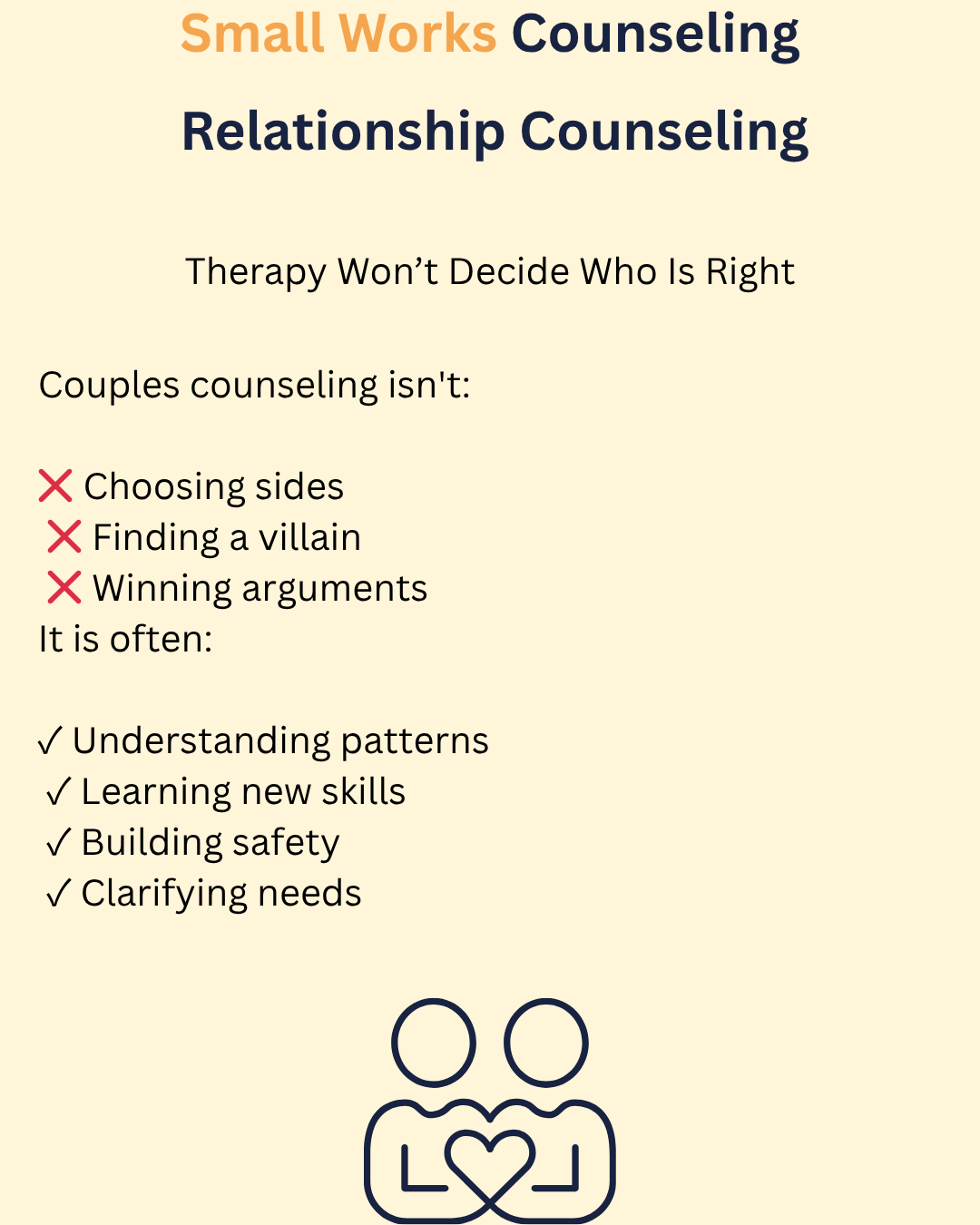
Therapy is not about assigning blame or choosing who is right.
Instead, counseling often focuses on:
Understanding patterns
How do conflict cycles start? What keeps them going?Improving communication
Learning ways to express needs without escalation or shutdown.Exploring expectations
Unspoken assumptions often create tension.Increasing emotional safety
Building environments where honesty feels possible.Supporting connection
Helping partners move toward the relationship they want—not the relationship others expect. -
Many relationship struggles are influenced by differences in nervous systems, trauma histories, communication styles, sensory needs, and executive functioning—not a lack of care.
Therapy can create space to better understand these differences with less shame and more curiosity.
-
Do you work with polyamorous or open relationships?
Yes. Counseling is intended to be affirming of diverse relationship structures and explore the needs, agreements, communication, and challenges within those relationships.
Are you kink-aware?
I aim to provide counseling that is respectful of kink/BDSM communities and avoids pathologizing consensual adult practices.
Do you only see LGBTQ+ clients?
No. Services are open to many clients while intentionally working to provide affirming care for LGBTQ+ individuals and relationships.
Can we come even if our relationship is “mostly okay”?
Absolutely. Many people seek counseling for maintenance, growth, or preventative support rather than crisis.
Do you provide virtual sessions?
Virtual counseling can offer flexibility, privacy, and accessibility across Ohio.